Bristol 405 saloon · date not recorded
£3,188 12s 6d[1]
Four-door saloon, including purchase tax. The source does not date the figure within the car's life.

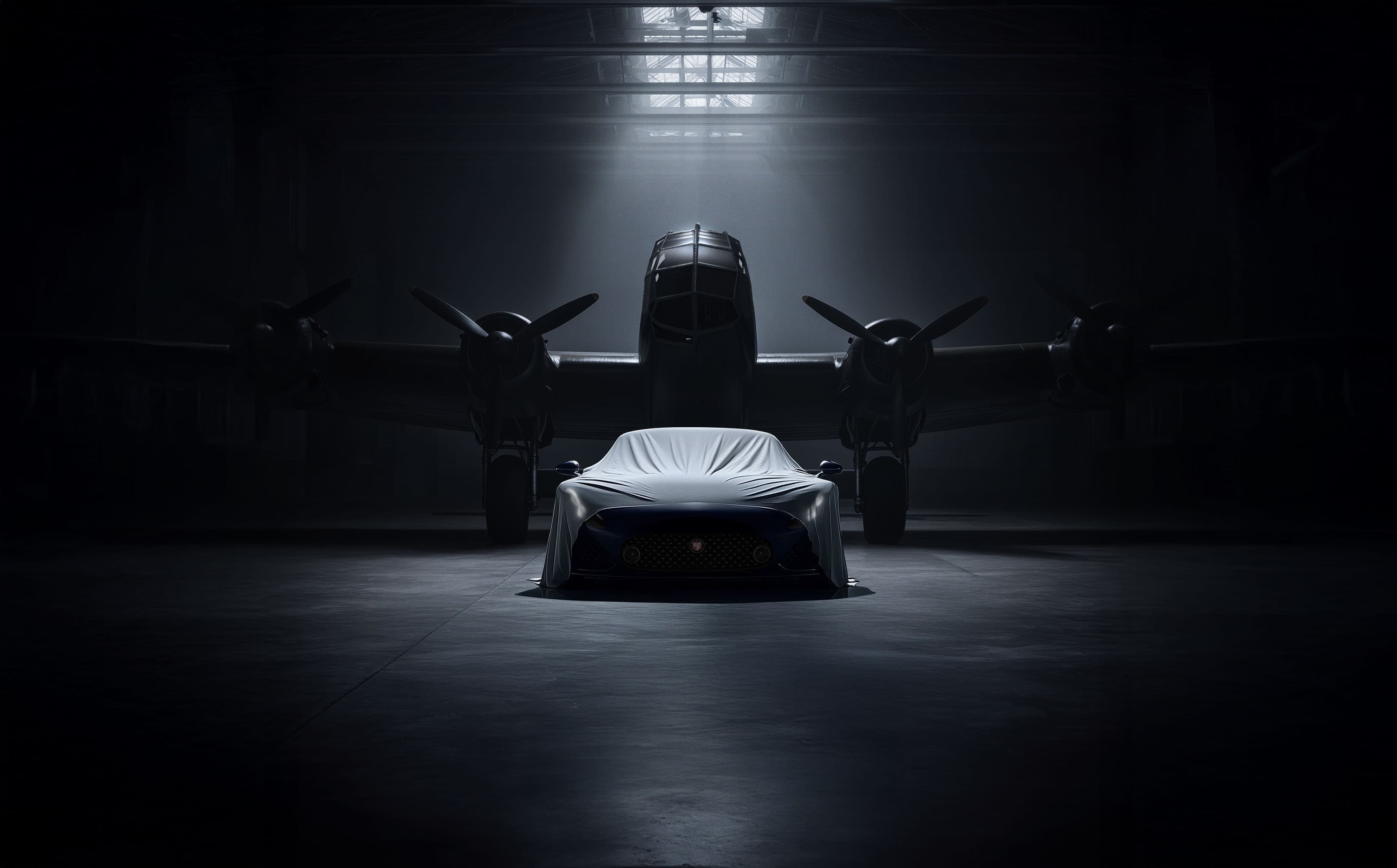
1954 · The gentleman’s express
The only four-door Bristol.
The 405 carried the 404’s ideas onto the full-length chassis and became the only four-door motor car Bristol ever produced, a family car for fast, long journeys.
The 405 took the 404's construction onto the full-length chassis and became the only four-door motor car Bristol ever produced. With an Abbott-bodied drophead beside it, it was the car the new Bristol Cars Ltd found easiest to build, and one its owners used hard.
Shown in 1954 and listed from October 1955, the 405 used the 404's style of construction on the longer frame, with an overdrive on top gear that behaved as a fifth. It was bought as a working car as much as a business saloon: owners drove them across continents, and one French owner covered forty thousand kilometres in two years.
A drophead version was bodied by Abbott of Farnham on an ash frame. Lessons from the open car stiffened the screen pillars of every later saloon. The last 405 was built in February 1958, as the 406 arrived.
The 405 used an extended version of the 404's wooden canopy on an extended metal lower frame. The first car had a semi-circular edge to its rear window; by production it had grown vestigial fins. It was lighter than the 403 and carried over the 404's anti-roll bar and its forward-mounted spare wheel and fuel tank. The overdrive was a Laycock unit behind the gearbox, worked by a toggle switch on the dashboard.
The 405 was listed in the autumn the Car Division became Bristol Cars Ltd, and it was the easier car for the new company to build.
The 405's first public outing went badly. At the 1954 Paris Show the demonstration car boiled in heavy traffic, and orders were lost on the spot. With aircraft-industry caution, the engineers traced a fault in that car's cylinder head and redesigned the angles and thickness of the cooling fan blades.
Piston knock on cold starts was a further concern, and a 1955 internal memo said plainly that it was not what a buyer would expect. It was cured with Wellworthy T-slot pistons in low-expansion alloy, tested for silence on the development car THL 405. Later cars also gained strengthened hub bearings after failures under hard cornering.
The drophead chassis were driven from Filton to Farnham with bonnet and front wings in place but no bodywork behind the scuttle, about half a dozen at a time. Abbott's craftsmen recalled that the 16-gauge alloy Bristol specified was hard to weld without cracking, that setting the two rear fins at exactly the same height was the critical task, and that the paint was finished to a very high standard. On the first two cars the hood sat flush in a well; after that it stood proud, to give more room in the cabin.
Special orders were honoured. Sheikh Yusuf Mohammed Al Tawil of Saudi Arabia ordered a drophead with a hydraulically operated hood and electric windows, shipped to Jeddah at the end of 1955. Factory publicity posed 405 dropheads with Britannia airliners and the Clifton Suspension Bridge behind them.
405s were family workhorses, photographed with children, dogs and farm produce aboard. Geoffrey Herdman took his drophead on journeys to both Americas, South Africa and New Zealand. Henri Archibald, who traded his 404 for a 405 in April 1956, cruised long stages fast with only the brakes to complain of, and told friends never to buy an Aston Martin without first trying a Bristol. In 1956 the Adelaide Advertiser called the breed bullet-fast yet among "the most docile and gentle of cars", able to trickle in traffic and run fast in the same gear.
Tony Crook drove a 405 to first in class and sixth overall in the 1955 Silverstone production car race, and from that year saloon owners knew their engines had been proved in far harder use, by the works 450s that finished first, second and third in class at Le Mans in 1954 and 1955. Crook bought so many 405s, paid for in advance, that he sometimes felt he was financing the company.
The wooden frame was the car's weakness in the tropics. One 405 returned from Central Africa for restoration had to be scrapped because termites had eaten its frame; another, a black saloon damaged by a lorry, was shipped back from Rhodesia to be rebuilt rather than discarded.
Figures as recorded in period and historical sources, reproduced as quoted rather than as tested figures.
| Bristol 405 | |
|---|---|
| Shown | 1954 (Paris Show) |
| Listed | from October 1955 |
| Body | four-door saloon, wooden canopy on a metal lower frame; drophead by Abbott of Farnham on ash frames |
| Engine | 2-litre six, 100B or 100B2, 105 bhp |
| Transmission | four-speed with Laycock overdrive on top gear |
| Last built | February 1958 |
Lineage and related pages
Sources. Bristol Cars Group heritage research from period and historical published sources; approved page copy, Bristol Cars Group. Figures quoted are Bristol Cars Ltd’s own published claims of the time and have not been independently tested by Bristol Cars Group Ltd.
Price new
What a new 405 cost. No dated show list including the 405 has yet been found, so it stands alone here. Until 1973 British car prices were a basic price plus purchase tax, and the rate changed often. Prices here include purchase tax unless marked basic.
Bristol 405 saloon · date not recorded
£3,188 12s 6d[1]
Four-door saloon, including purchase tax. The source does not date the figure within the car's life.
Sources
Bristol Cars Approved


