Bristol Cars
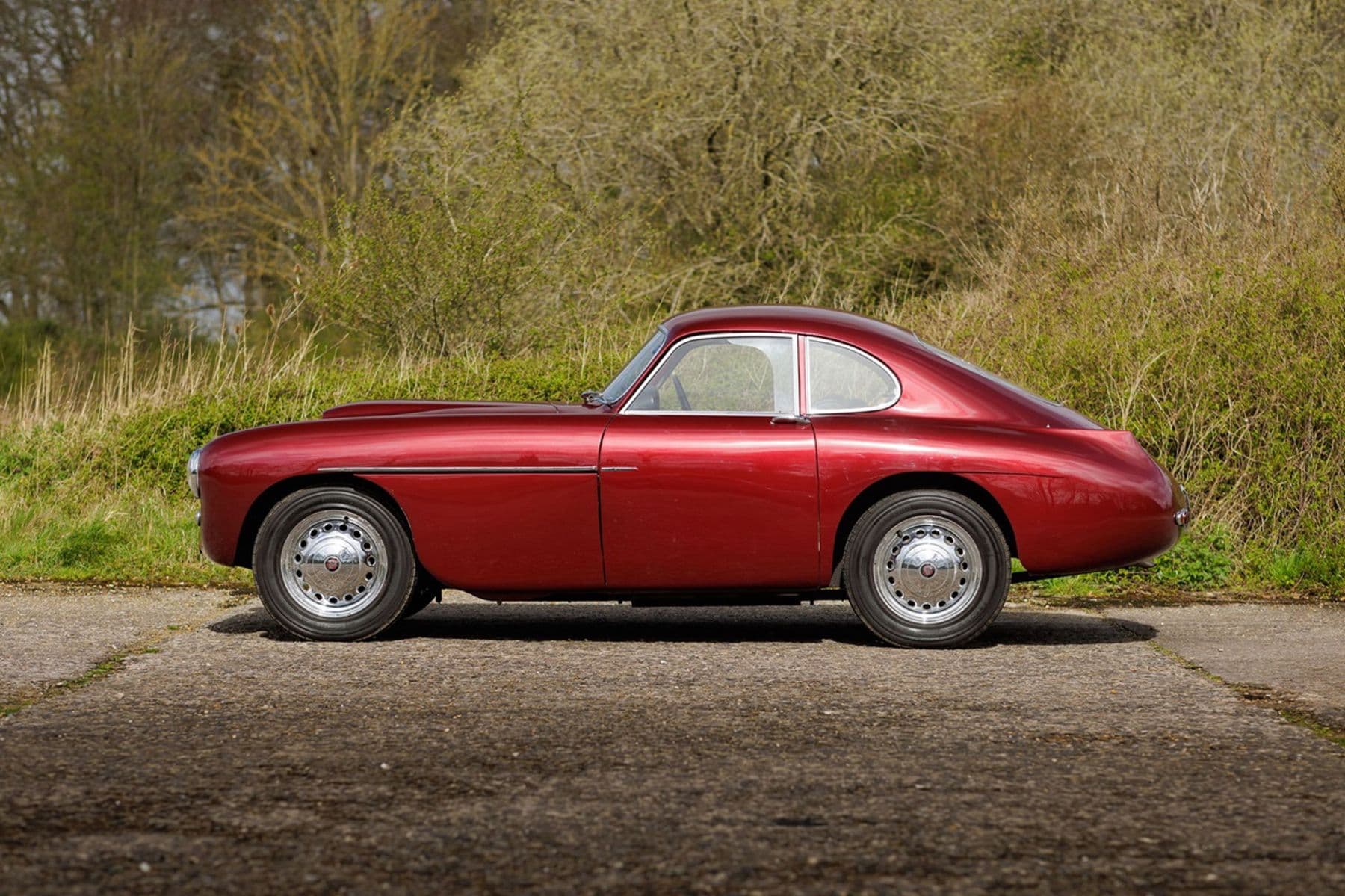
A Bristol 404 coupé, the Businessman’s Express
Bristol heritage

1953 · The gentleman’s express

The Bristol 404

The Businessman’s Express.

On a chassis shortened by eighteen inches, the 404 distilled the Bristol idea into a compact, hand-built two-seater of aircraft quality that carried its speed quietly; the four-door 405 followed on the full-length frame.

The 404 of 1953 was a two-seater on a Bristol chassis shortened by about eighteen inches: compact, light and hand-built of steel, wood and light alloy. It was the first Bristol to give up the BMW-type grille, and its chassis went on to carry the Arnolt-Bristol.

The 404 came from a simple realisation at Filton: the Bristol chassis could be shortened by about eighteen inches without losing what made it good. The body that Dudley Hobbs and Jim Lane drew for it dropped the marque's BMW-derived grille for an air intake that recalled the Brabazon airliner, mounted the spare wheel behind a front wing and used steel, wood and light alloy each where it served best. In its day the press called it the Businessman's Express.

A shorter chassis

The realisation was Jack Channer's. The idea was shelved for two years and revived early in 1953, and the first prototype had a wheelbase identical to the production car's. The 404 did not replace the 403: the two were offered side by side, the four-seater complementing the new two-seater.

The resemblance to the Brabazon's intake was, by the designers' later recollection, probably partly subconscious. Other features were new to the line: outboard headlamps, a three-nacelle front, and the spare wheel carried behind the front wheel under an upward-opening hinged cover. The radiator was tilted to allow a lower bonnet, the rear shock absorbers were unusually long and the front brakes used specially finned Alfin drums.

Wood, steel and light alloy

The 404's construction was a considered decision. The parent company preferred to keep its metalworkers on aircraft and on its aluminium buildings, of which it had put up more than 700 schools by December 1951, so the 404 did not use the labour-hungry Superleggera tube body of the 401 and 403. Instead it had a wood-framed canopy, made with the coachbuilding skills available: door pillars, rear window rails and roof supports built as one standalone structure, then lifted onto and secured to a steel and light-alloy lower framework. The car weighed 200 kg less dry than the four-seater 403. Wood featured in Bristol bodies only in the marque's first twelve years.

The method had a cost in hot climates. In Australia the timber framing of 404s and 405s suffered badly, with dropped doors and cracks advancing at the base of the screen pillars, a failure Filton said was new to it. The factory's answer, given by post, was to remove the body skin and fit a stiffener at the screen pillar.

On the road

The short chassis made the 404 a more demanding car than its predecessors. With the A-bracket's high rear roll centre its handling could swing from understeer to oversteer, and it was no car for a novice in the wet; Channer favoured the early Michelin X radial tyres despite their sharper breakaway. Its anti-roll bar and its forward-mounted spare wheel and fuel tank were carried over to the four-door car. So few were built that the 404 was ineligible for the 1954 Silverstone production car race.

Its owners used it as Bristol intended. Henri Archibald, a French owner, traded his 404 for a 405 in April 1956 and went on to cover 40,000 km in two years.

The Abbott drophead and the Arnolt-Bristol

Only one 404 drophead was built, by Abbott of Farnham. It was shown at Earls Court in 1953, silver with red leather seat panels, and a brochure was produced specially for it.

The 404's chassis had a longer life in America. James Watt, appointed export sales manager in 1952, met S. H. "Wacky" Arnolt in New York in 1953; Arnolt had opened a foreign-car showroom in Chicago at the end of 1950. The Arnolt-Bristol was built on a modified 404-type chassis, with softer springs, an altered steering rake, a long gear lever and the simpler 403 brakes. The chassis travelled by train and ferry to Bertone in Turin, and the completed cars went direct to America. Their bodies, designed by Nuccio Bertone and Franco Scaglione, were steel rather than aluminium, chiefly so that American panel beaters could repair them.

What came after

The four-door 405 took the 404's construction onto the full-length chassis. A sports-car successor was also drawn: Project 225, a left-hand-drive two-litre chassis with drawings dated 28 August 1954, based on an updated 404 with double-wishbone front suspension and a Watt linkage at the rear. It was judged unviable without a continuing supply of 2-litre engines. The 404 remained the last two-seater Bristol in series production until the Fighter, half a century later.

Published figures

Figures as recorded in period and historical sources, reproduced as quoted rather than as tested figures.

Bristol 404
Introduced1953
ChassisBristol frame shortened by about 18 in
Bodywood-framed canopy on a steel and light-alloy lower framework
Dry weight1,026 kg, 200 kg less than the 403
Engine2-litre six, 100B or 100B2, 105 bhp; up to 125 bhp optional with high compression, six-branch exhaust and sports camshaft

Lineage and related pages

Sources. Bristol Cars Group heritage research from period and historical published sources; approved page copy, Bristol Cars Group. Figures quoted are Bristol Cars Ltd’s own published claims of the time and have not been independently tested by Bristol Cars Group Ltd.

Price new

What it cost new

What a new 404 cost, set against the other sporting cars at the 1953 Earls Court show. Until 1973 British car prices were a basic price plus purchase tax, and the rate changed often. Prices here include purchase tax unless marked basic.

Bristol 404 · October 1953

£2,500 basic[1][2][3]

Basic price at the 1953 Earls Court show; £3,542 15s 10d with purchase tax.

Priced against: Bristol 404, October 1953
CarPrice
Bristol 404£2,500 basic
Daimler Conquest Roadster£1,180 basic
AC Ace£915 basic

Basic prices, same issue of Motor Sport

Archive plates

A Bristol 404 coupé