Bristol Cars
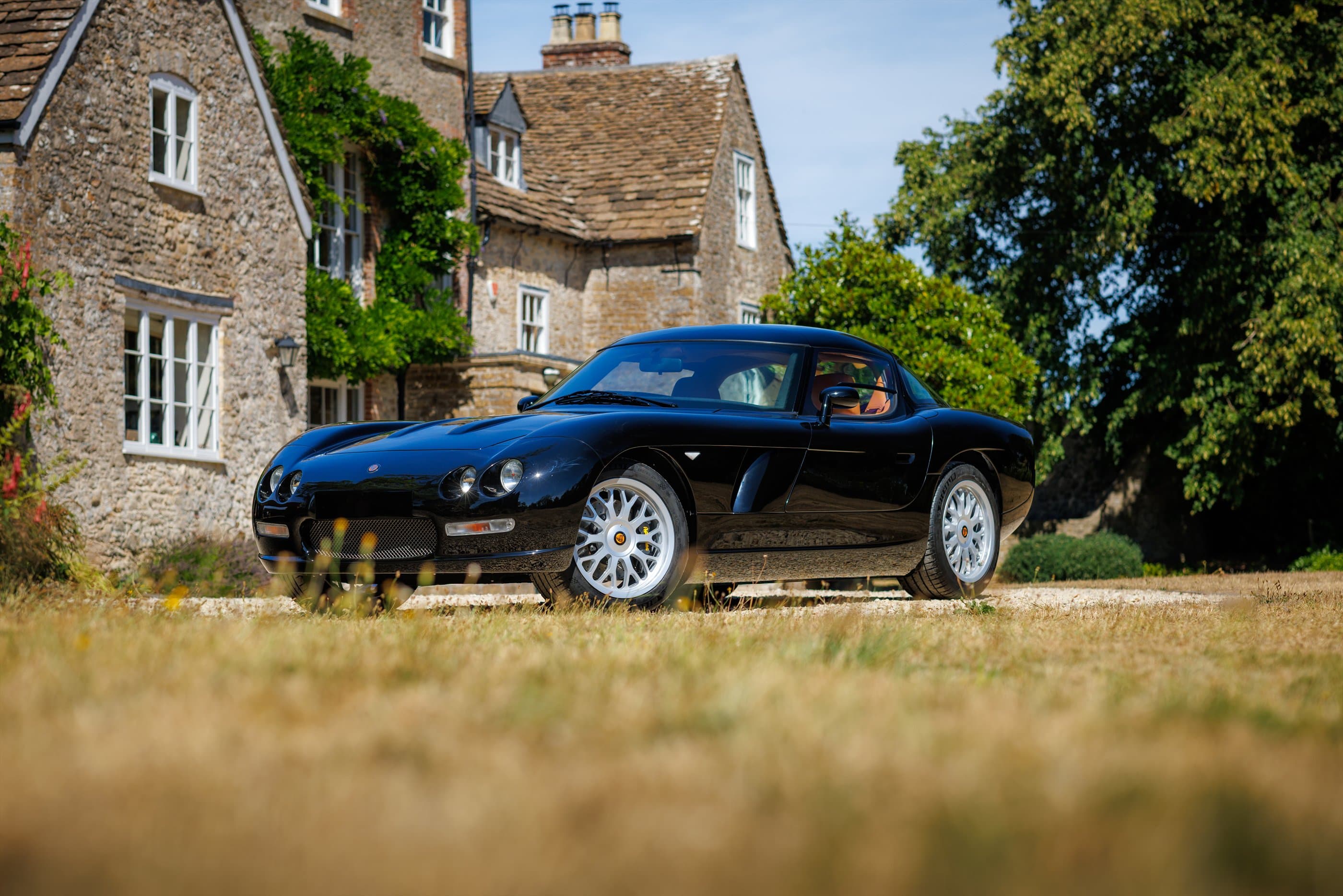
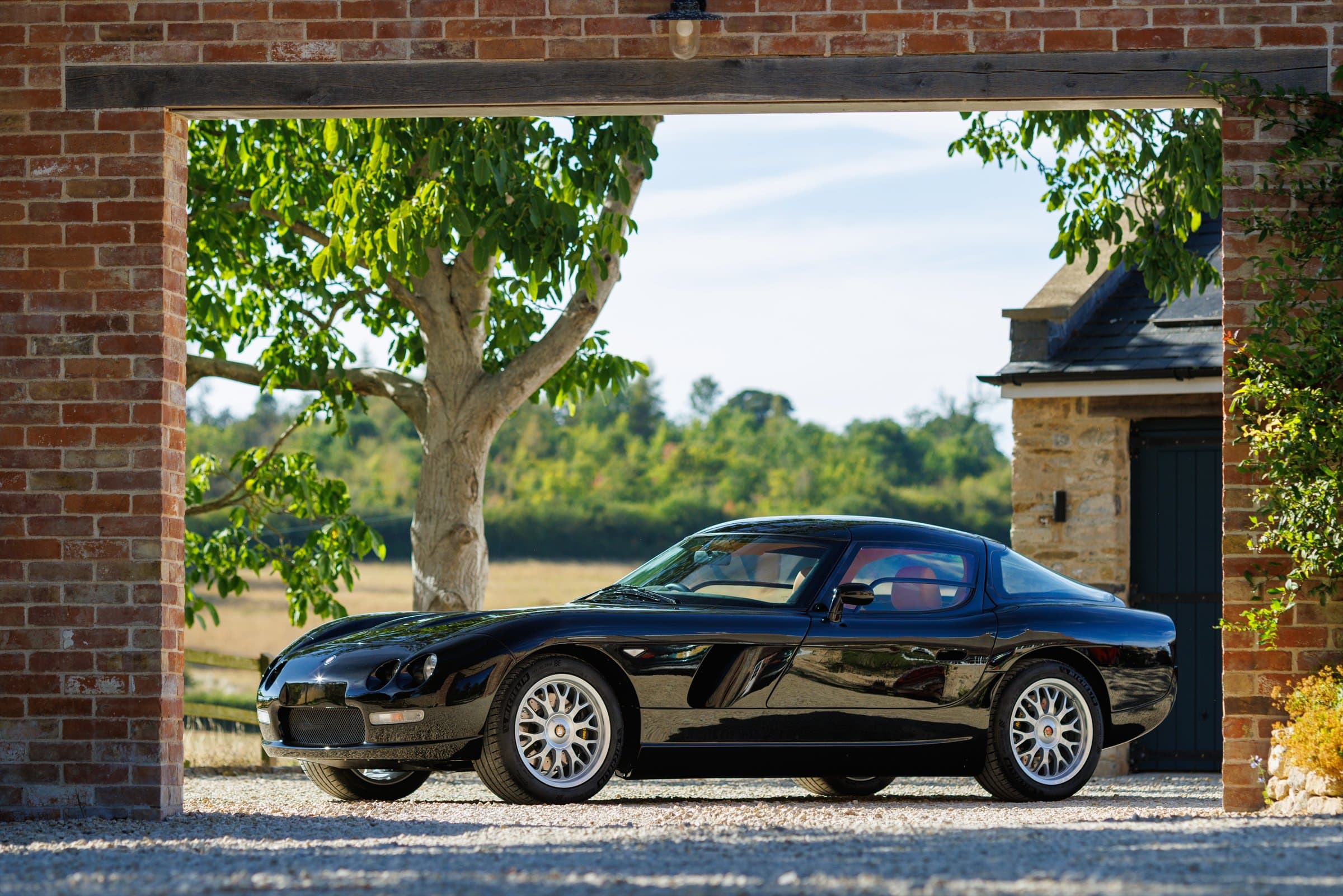
Newly built black Bristol Fighter framed by a brick opening
Bristol heritage

2004 · The V10 supercar, 2004 to 2011

The Bristol Fighter, 2004 to 2011

A supercar designed from first principles.

The Fighter rejected the established supercar template, combining a front-mounted V10, compact proportions, exceptional visibility and gullwing doors in a uniquely Bristol form.

Announced at the end of 1999 and built at Filton from 2004, the Fighter was Bristol's first two-seater in half a century and its first manual car in forty years. What follows is the story of the original car, told as far as possible from Bristol's own documents of the time. The final series of Fighters now being completed is described on the Fighter page.

Photograph: the first car of the final Fighter series, completed in 2026. The history below is of the original programme.

A two-seater for the year 2000

Bristol had not built a two-seater production car since the 404 of the mid 1950s. In the last weeks of 1999 the company revealed that it was working on one again. The car had a name before it had a shape: Fighter, after the two-seat aeroplane that Frank Barnwell designed for the Bristol Aeroplane Company in 1916 and that Bristol's own history called the finest of its type in the First World War.

The document Bristol published on its website in 2000 under the heading "Bristol Project 'Fighter'" is unusual for a car announcement. It contains very little styling and a great deal of argument. It explains that the car would be the first Bristol in forty years to offer a manual gearbox, that it would be built around an 8-litre Chrysler-based aluminium V10 modified "as it is normal Bristol practice", and that it would nonetheless "potter around town with calm docility in traffic". It also explains why Bristol was talking about the car so early: the company did not want to deny rumours or run a test programme under disguise, and preferred to develop the car openly on the road "where it really matters". As of the day of publication, the document says, "the mechanical design is frozen and components are now being sourced", and orders were already in hand.

The photographs accompanying the announcement show a silver scale model on a felt-covered board. Bristol was careful to describe it as an engineering concept used to confirm packaging and aerodynamics, not a finished design.

The engineering argument

The Fighter's shape was settled by engineers before stylists were allowed near it. Bristol's announcement put the point bluntly: car design normally begins with styling sketches, "either 'retro', or flashy 'techno'", and the engineers then work within them. Bristol's were designed "solely by engineers who started with the burning ambition to create a real driver's car".

Two decisions followed from that. The first was the front mid-engine layout with a slight rearward weight bias, which Bristol regarded as the mark of the best rear-wheel-drive cars and which gave the Fighter its long bonnet and cab-rearward stance. The second, and the one the company was proudest of, was the rejection of downforce.

Bristol's aerodynamicists had experience of high-downforce racing cars and chose not to use it. Their reasoning, as published in 2000, was that downforce does nothing for grip at the speeds where drivers actually run short of it, below about 70 mph, while costing drag at every speed; and that at very high speed its effect varies with wind direction, so that a cornering speed that is safe one day may not be safe the next. What a road car needed instead was aerodynamic stability, low drag and mechanical grip from pure suspension geometry. The Fighter's panels were therefore calculated to let air pass cleanly under a smooth belly and to balance the flow over the top of the car for neutral lift, without wings or venturis. The 2000 document predicted a drag factor of about 0.27; the production specification later quoted 0.28.

By April 2001 Bristol could report that moving-floor wind-tunnel work had confirmed the predictions, that lift had been eliminated "even at speeds in excess of 200 mph", and that yaw testing had included simulated 50 mph side gusts at 200 mph road speed. The same release described a structure that had exceeded its stiffness targets by "modifying the relative usage of steel, aluminium and composite materials" and remarked, with some relish, that the current fashion for lavish carbon fibre in inappropriate places had been ignored.

An everyday car, not a toy

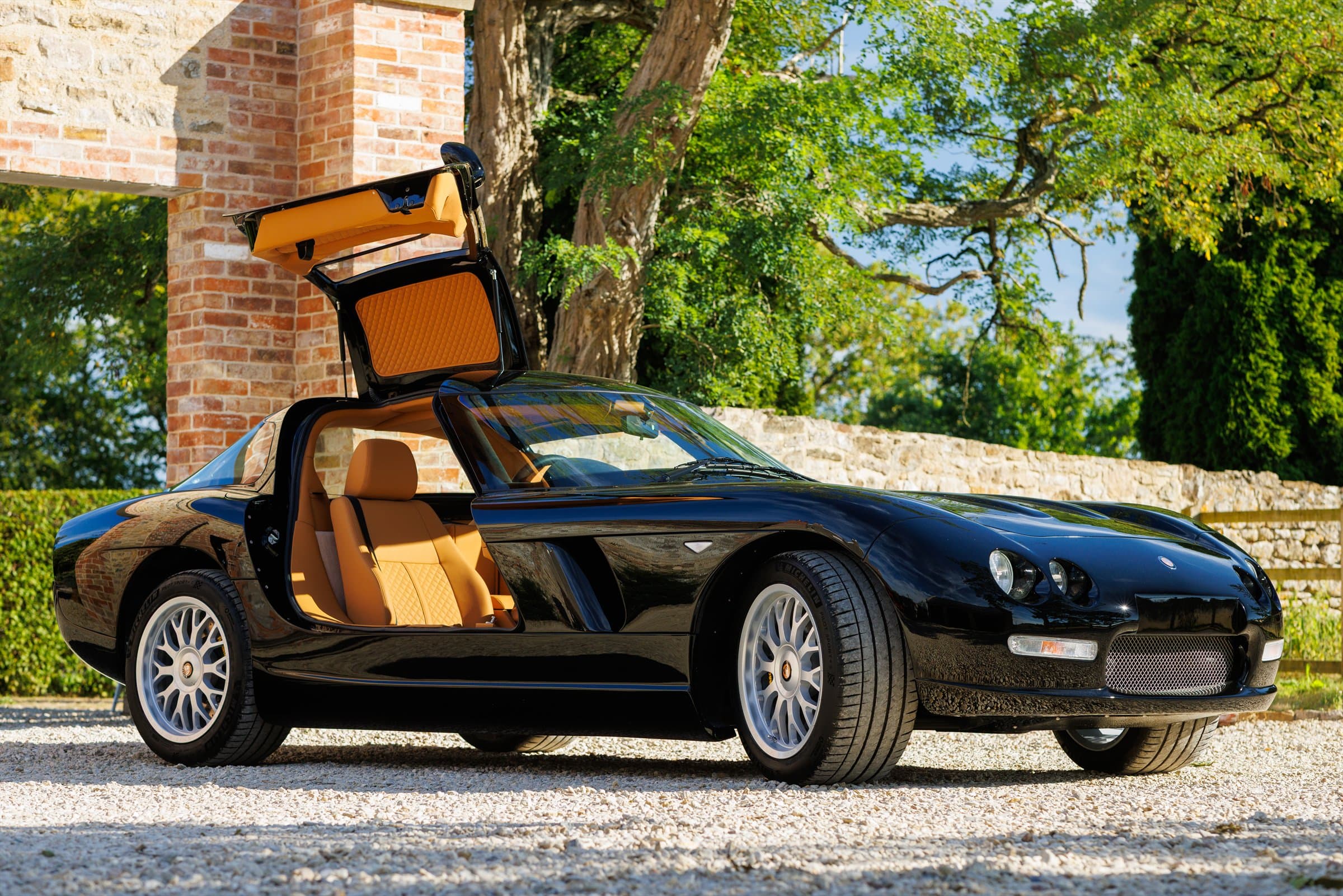
Every Bristol document about the Fighter returns to the same theme: this was to be a car for daily use. The gullwing doors were justified not as theatre but because they made entry and exit easier "for the less athletic" and could never foul a high kerb. The driving position was designed for people from 4 ft 11 in to 6 ft 7 in. There was a full-size spare wheel, a boot that Bristol claimed was larger than that of many saloons and would take two people's touring luggage or two sets of golf clubs, 8 inches of ground clearance ahead of the front wheels and 6 inches beneath the car, slim pillars, and a turning circle of 11.5 metres that the company likened to a London taxi's.

Bristol also insisted on compactness. The Fighter measured 4,420 mm long and 1,795 mm wide, a footprint the 2001 release described as "no larger than a Porsche 911", at a time when the company thought most fast cars had become "tiresomely bulky particularly in width". Inside, the instruments took an aircraft theme, with oil temperature and pressure, fuel pressure, outside air temperature and an engine-hours display, and an overhead console for the switches used when the car was stationary.

From announcement to production

Bristol's April 2001 interim update said the programme was on target for first deliveries "around the end of 2001", that the first year's production had been pre-sold within three months of the November 1999 announcement, and that output would be limited by the factory's capacity to twenty Fighters a year worldwide. The price was £175,000 before tax.

The car took longer than that. The first full specification appeared on Bristol's website at the end of 2002, at the same £175,000 (£205,625 with VAT). By August 2003 the Fighter was physically on view at the Kensington High Street showroom and the base price had risen to £195,000. Bristol's own later history pages date the model to 2004, and its 2010 production table records "Fighter Production: 2004-current". Bristol Cars Ltd entered administration in March 2011 (Companies House), and Fighter production ended with it; the company did not publish a production total for the model, and until Bristol's surviving factory records have been examined this page does not offer one.

Three details changed in the published specification as the car went from prototype to production, and they are recorded here because they show a car being developed rather than a brochure being reprinted. The kerb weight was given as 1,400 kg in the 2000 plan, 1,475 kg in 2002 and 2003, and 1,540 kg from 2004. The compression ratio was quoted as 9.25:1 in 2002 and 9.4:1 from 2004. The inner structure was described as aluminium in 2002 and 2003 and as steel from 2007; the 2001 release had already said the mix of steel, aluminium and composite had been rebalanced during development.

The V10

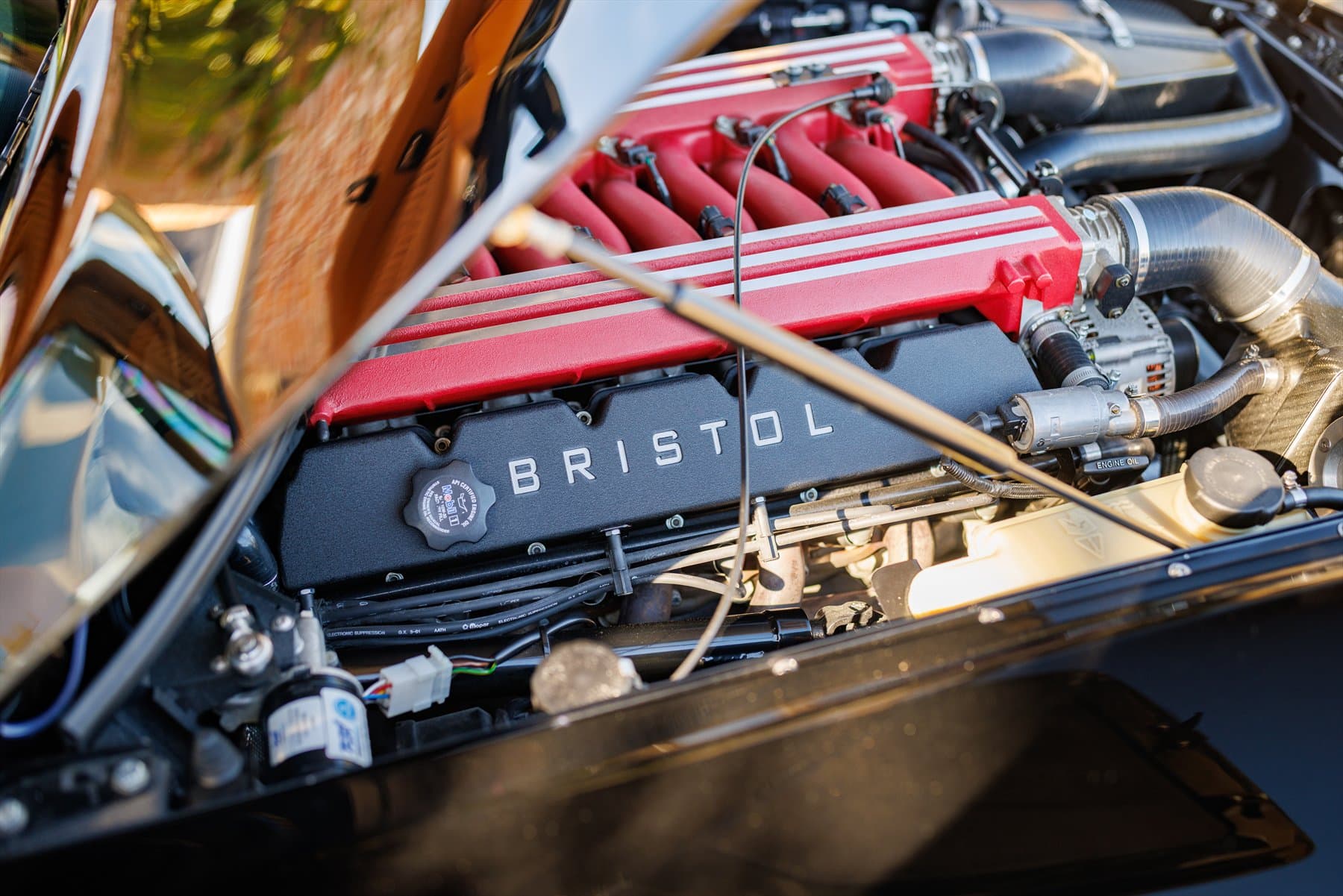
The Fighter's engine was Chrysler's all-aluminium 8-litre V10, the Viper unit, developed to Bristol's requirements. Bristol's pages described it as "specially developed to suit Bristol requirements"; the company's later history pages call it a "modified Chrysler Viper 8 litre V-10", which is the plainer description. Bristol quoted 7,996 cc, a bore and stroke of 101.6 by 98.6 mm and, for the standard car, 525 bhp at 5,600 rpm with 525 lb ft of torque.

Bristol made much of the engine's character rather than its peak figures. It noted that the V10 weighed no more than the company's 5.9-litre V8, that 350 lb ft was available at tickover, and that the factory's "lead-footed" test drivers regularly returned more than 20 mpg. From 2004 the pages added that output rose to 550 bhp "at very high speed due to aerodynamically induced supercharging effect", Bristol's description of ram pressure in the inlet system. A six-speed close-ratio manual gearbox was standard, giving 60 mph in first and 100 mph at 2,450 rpm in sixth; a four-speed automatic was optional, and the 2000 announcement had claimed the Fighter as the first production car capable of over 200 mph to be offered with one.

The Fighter S

By the middle of 2004 Bristol had added an optional Fighter S. The difference was in the engine: a normally aspirated version quoted at 628 bhp at 5,900 rpm, with a second figure of 660 bhp that Bristol explained as the effect of aerodynamic overpressure in the inlet system at speed. Torque was given as 580 lb ft at 3,900 rpm in 2004 and 590 lb ft on later pages. The base price of the S was £218,000 (£256,150 with VAT) against £195,000 for the standard car.

The Fighter S did not change the car's dimensions, weight or structure; the specification tables list it as an option on the same chassis.

Published specifications

The figures below are Bristol's own, as published on its website between 2002 and 2010. They are reproduced as attributed factory claims and were not independently tested by Bristol Cars Group. Where Bristol's pages disagreed with themselves the entry says so.

FighterFighter S
Engine7,996 cc all-aluminium V10, 101.6 x 98.6 mmas Fighter, normally aspirated, uprated
Power525 bhp at 5,600 rpm (550 bhp claimed at very high speed)628 bhp at 5,900 rpm (660 bhp claimed at very high speed)
Torque525 lb ft580 lb ft at 3,900 rpm (2004); 590 lb ft (2007 onwards)
Compression ratio9.25:1 (2002); 9.4:1 (2004 onwards)as Fighter
Gearbox6-speed manual; 4-speed automatic optional; final drive 3.07:1 with limited slipas Fighter
Structuresteel and aluminium platform chassis, steel roll-over cage, hand-formed aluminium panels, carbon-fibre doors and tailgateas Fighter
Wheels and tyres18 x 10 in forged aluminium; 285/40 x 18 front and rear; full-size spareas Fighter
Brakes343 x 32 mm ventilated discs, 6-piston callipers front; 343 x 26 mm, 4-piston rearas Fighter
Length, width, height4,420 mm, 1,795 mm, 1,345 mmas Fighter
Wheelbase and track2,750 mm; 1,470 mm front and rearas Fighter
Turning circle11.5 mas Fighter
Kerb weight1,540 kg (2004 onwards; 1,475 kg quoted 2002 to 2003)as Fighter
Drag coefficient0.28as Fighter
Performance, as claimed by Bristol"approximately 210 mph"; 0 to 60 mph "approximately 4 secs" (2004), "less than 4 secs" (2010)not separately stated
Base price (UK, ex VAT)£175,000 (2001 to 2002); £195,000 (2003 to 2004)£218,000 (2004)

Two figures are deliberately left out of the table. Bristol's pages gave the peak-torque engine speed three different ways (3,600, 4,200 and 3,500 rpm) and gave the fuel capacity as 100 and 135 litres in the tables but 105 and 130 litres in the text, without saying which were nominal and which usable. The original pages, with every figure as Bristol published it, are reproduced in the Factory Archive.

Where the Fighter sits in Bristol's history

The Fighter was the last new Bristol design to reach production before the company entered administration in 2011, and the only one of the marque's cars conceived from the start as a supercar. It was also thoroughly a Bristol: front-engined, hand-built in aluminium at Filton, compact, sized for real roads and designed around the person in the driving seat. Bristol's own retrospective summary, written in 2015, called it an "iconic two-seater supercar" with "gullwing doors and the turning circle of a London taxi" whose design shared features with aircraft, missiles and submarines.

The twin-turbocharged Fighter T that Bristol announced in 2006 has its own page. The five chassis of the final series, of which the black car is the first to be completed, are described on the Fighter page.

Lineage and related pages

Sources. Bristol Cars Ltd website, bristolcars.co.uk, as archived: "Bristol Project 'Fighter'" (2000); "Release date 7th April 2001, interim update"; Fighter pages of December 2002, June 2004, October 2007 and November 2010; "Bristol Cars History" (2015); History page with production table (2010). Independent contemporary report: Classic Driver, "New Bristol Fighter T", 9 November 2006. Present-day facts about the final series: Bristol Cars Group Ltd. Figures quoted are Bristol Cars Ltd’s own published claims of the time and have not been independently tested by Bristol Cars Group Ltd.

Price new

What it cost new

What the original Fighter cost, set against cars on sale at the time.

Bristol Fighter · May 2003

£229,125[1][2][3][4]

£195,000 plus VAT, at the car's unveiling.

Priced against: Bristol Fighter, May 2003
CarPrice
Bristol Fighter£229,125
Jaguar XJR£58,500
Maybach 62£281,380
Rolls-Royce Phantom£250,000-plus
Porsche Carrera GT£250,000-plus
Bentley Continental GT£110,000

Fleet News, January and March 2003; VAT basis not stated

Bristol Fighter S · 2005

about £256,000[5][6][7]

As reported in 2005 and again in 2006; the Fighter S had been added in 2004. VAT basis not stated.

Priced against: Bristol Fighter S, 2005
CarPrice
Bristol Fighter Sabout £256,000
Jaguar XJ Super V8£71,970

Auto Express, November 2004, the nearest dated Jaguar price and a year earlier than the Bristol figure; VAT basis not stated

These were the prices of the original cars. The final series is offered by application; see the Fighter page.

Final-series photography

Newly built black Bristol Fighter viewed from the front three-quarter angle
Newly built Bristol Fighter with its gullwing door raised
Bristol Fighter V10 engine bay detail

Next in the story

Bristol Fighter T

All Bristol model pages

Continue through the models