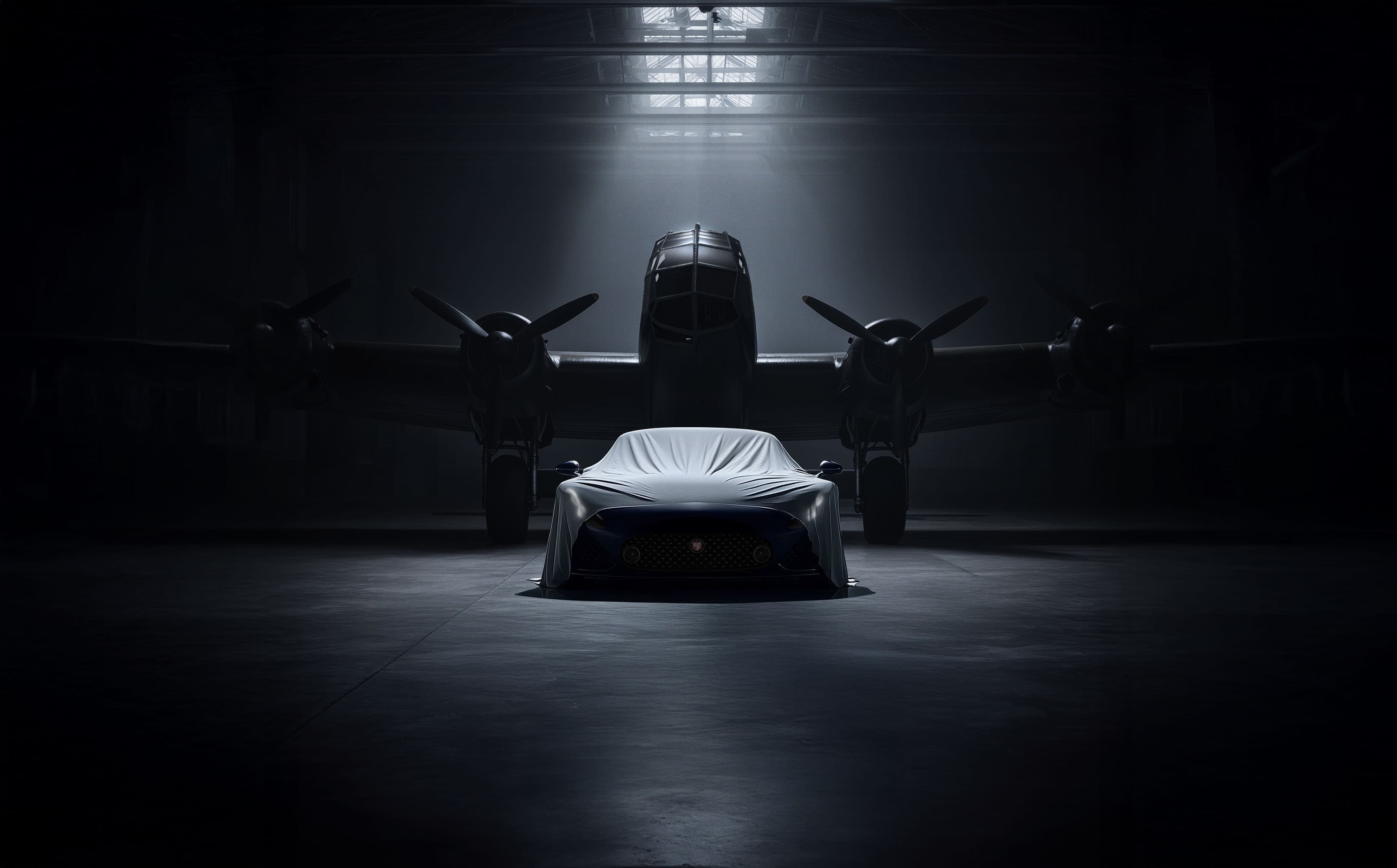
The Fighter T kept the Fighter's all-aluminium 8-litre V10 but added two ball-bearing, water-cooled turbochargers with intercooling, uprated engine internals, high-flow cylinder heads with a high-lift camshaft, a larger cooling system and catalysts, and a free-flow exhaust exiting at the sides of the car. Bristol quoted a compression ratio of 9.3:1 and an output of 127 bhp per litre.
The rest of the car was revised to suit. The structure was said to be 30 per cent stiffer in torsion. Springs were firmer and ride height 10 mm lower; the front anti-roll bar was 25 per cent stiffer; dampers were firmer "sports" units; wishbone geometry was revised front and rear with 40 per cent more castor; the rear torque bushes were ball-jointed. Wheels grew to 19-inch five-spoke lightweight alloys carrying 285-section front and 335-section rear tyres. The six-speed manual gearbox was given increased torque capacity and revised ratios, keeping 60 mph in first gear and giving 49.8 mph per 1,000 rpm in sixth.
Outside, the T was to be identified by a radiused intake grille, side-exit exhausts with polished stainless outlets and a rear wake diffuser; the 2010 description added a front splitter. Inside, Bristol proposed an engine-turned aluminium instrument and centre console, aluminium switchgear, a turbo boost gauge, lightweight "racing style" seats and a lightweight steering wheel.