Bristol 411 · 1969
£6,997[1][2]
Launch price, including purchase tax. No dated 1969 list including the 411 has yet been found.
| Car | Price |
|---|---|
| Bristol 411 | £6,997 |
| Jaguar XJ6 4.2 | £2,258 |
Jaguar's launch price, September 1968; tax basis not stated

1969 · The V8 years
Quiet authority, delivered at speed.
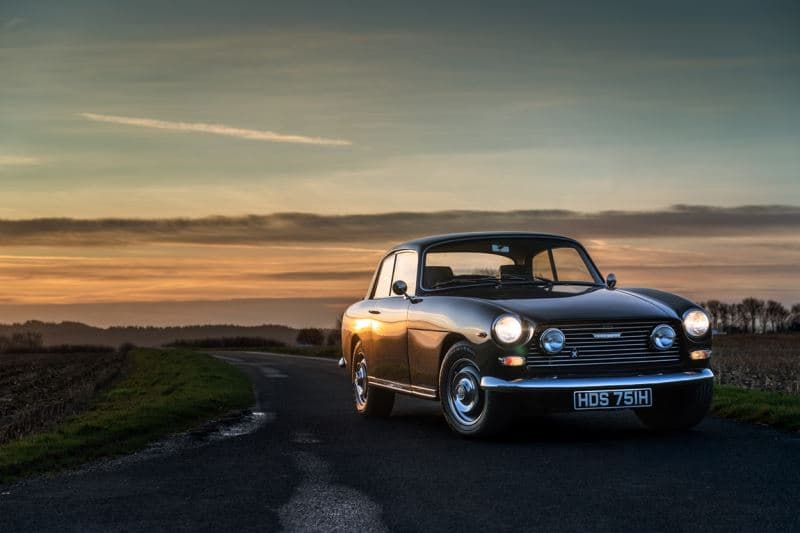
The 411 distilled Bristol’s V8 grand-touring formula into one of the marque’s most recognisable and enduring forms.
The 411 distilled Bristol's V8 grand-touring formula into one of the marque's most recognisable and enduring forms. Introduced at Earls Court in October 1969 with a 6.3-litre Chrysler V8, it ran through five series to 1976, and thirty years later the factory revisited it with the 411 Series 6.
By 1969 Bristol had been building Chrysler V8 saloons for eight years, since the 407 of 1961 had replaced the company's own 2.2-litre six. The 410 of 1967 had refined the line with a lower, more curved body and a more sophisticated braking system. The 411 kept the 410's proportions and its two-door, four-seat hand-formed aluminium body on the separate steel chassis that every Bristol had used since 1946, and changed what was under the bonnet.
The new engine was Chrysler's big-block B-series V8 of 6.3 litres. Bristol's history records that it gave the 411 "30 per cent more power than its predecessor". It was, as before, a Canadian-built Chrysler unit supplied to Bristol's requirements; the company had turned to Chrysler after the 1960 separation from the Bristol Aeroplane Company left it without the means to develop its own engines, and, in the words of the factory's own history, it ensured "a product of exceptional quality and restrained beauty, but with the heart of a lion".
Bristol's own account gives the sequence. The 411 was in production for seven years. A second series arrived in 1971 with self-levelling suspension. The third series followed a year later, in 1972. The Series 4 of 1974 brought a larger 6.5-litre engine, and the fifth series ran from 1975 to 1976. Over the car's lifetime electric windows, halogen headlamps and rear seat belts all became standard.
Bristol's production table of 2010 gives "Type 411 Production: 1969-1976". The company's website did not publish a production total for the model, and this page does not offer one.
The 411 was unveiled at Earls Court in October 1969. A month earlier, in September, Sir George White, who had run the Car Division from its formation and had bought Bristol Cars out of the aircraft mergers in 1960, was seriously hurt in an accident in his own Bristol 410. Bristol's history records that the car was only superficially damaged but that he never regained his health sufficiently to return to work full time, and that in 1973, "to safeguard the future of his loyal workforce", he sold his majority holding to Anthony Crook. The 411 therefore spans the change from the White family's Bristol to Tony Crook's: the last car conceived under the founder's grandson and the first sold entirely under Crook's ownership. When the ties with the Whites were cut, British Aerospace asked the company to leave Filton Aerodrome and it moved to nearby Patchway, with Crook's Kensington showroom as head office.
Bristol never quite let the 411 go. Its 2015 history credits Anthony Crook and Toby Silverton, who took a half share in 1997 and full ownership in 2002, with "the Speedster, Bullet and 411 Series 6", and the company's 2010 production table lists "Series 6 Production: 2000-current" alongside the Blenheim and Fighter. Bristol's website of those years also describes "factory developed upgrades pertaining to used Bristols" and, in 2015, the fitting of "the latest multiport injected engines and mated gearboxes" to older cars. That is the extent of what the company published: no Series 6 specification, quantity or chronology survives on its website, and this page does not reconstruct one.
A Bristol is never out of production, merely between series.
Bristol's own statements about the 411, as published in its histories of 2015 and 2018, reproduced as the company's figures.
| Bristol 411 | |
|---|---|
| Production | 1969 to 1976 (Bristol's 2010 table) |
| Body | two-door, four-seat saloon; hand-formed aluminium on a separate steel chassis |
| Engine | 6.3-litre Chrysler B-series V8 (Series 1 to 3); 6.5-litre (Series 4 and 5) |
| Power | "30 per cent more" than the 410 (Bristol's wording; no figure published on its website) |
| Top speed, as quoted by Bristol | 143 mph (Bristol's histories of 2015 and 2018) |
| Series | 1 (1969), 2 (1971, self-levelling suspension), 3 (1972), 4 (1974, 6.5 litre), 5 (1975 to 1976) |
| Later programme | 411 Series 6, listed by Bristol from 2000; no specification published |
Lineage and related pages
Sources. Bristol Cars Ltd website, bristolcars.co.uk, as archived: History (2010), "Bristol Cars History" (2015), Heritage (2018), Blenheim 3G (2003, on factory upgrades), homepage (2016, on service upgrades). Figures quoted are Bristol Cars Ltd’s own published claims of the time and have not been independently tested by Bristol Cars Group Ltd.
Price new
What the 411 cost new. Motor Sport's visit to Filton in 1975 set the Series 5 against the Rolls-Royce it was most often compared with.
Bristol 411 · 1969
£6,997[1][2]
Launch price, including purchase tax. No dated 1969 list including the 411 has yet been found.
| Car | Price |
|---|---|
| Bristol 411 | £6,997 |
| Jaguar XJ6 4.2 | £2,258 |
Jaguar's launch price, September 1968; tax basis not stated
Bristol 411 Series 5 · August 1975
£12,587[3][4]
Motor Sport called it "a modest £12,587".
| Car | Price |
|---|---|
| Bristol 411 Series 5 | £12,587 |
| Jaguar XJ 5.3 Coupé | £7,280 |
| Rolls-Royce Silver Shadow | £15,462 |
Same article, which gave the 411 as £2,875 less than the Silver Shadow; the Jaguar from the same issue of Motor Sport
Archive plates
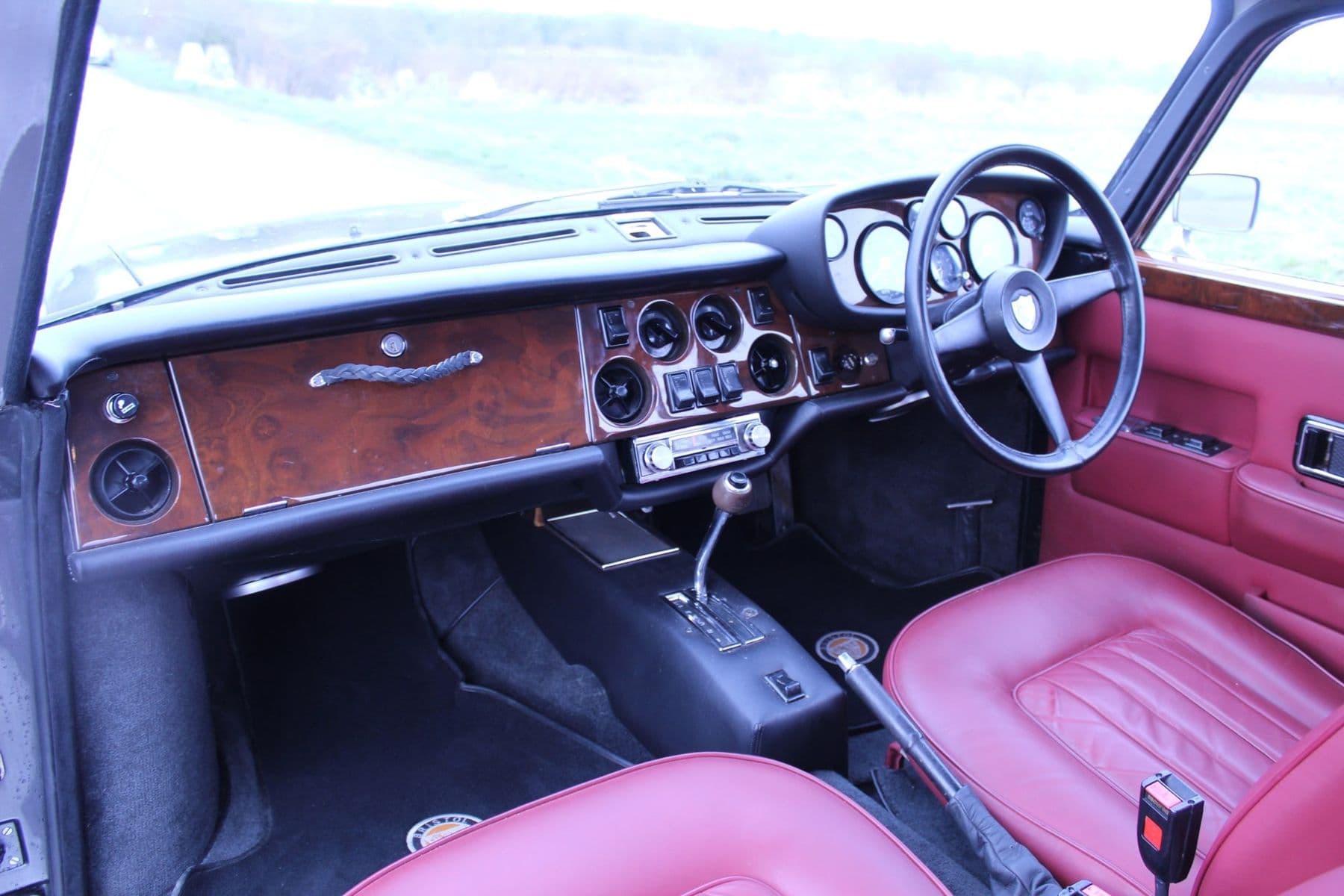
Bristol Cars Approved

1970 · Grey
£89,500·Offered through SLJ Hackett

1971 · Dark Grey
£74,500·Offered through SLJ Hackett

1972 · Dark Red
£125,000·Offered through SLJ Hackett

1973 · Silver
£49,950·Offered through SLJ Hackett

1974 · Red
£49,995·Offered through SLJ Hackett

1975 · Bronze-brown
£59,499·Offered through SLJ Hackett