Bristol 407 · October 1961
£5,141[1][2]
Including £1,616 purchase tax.
| Car | Price |
|---|---|
| Bristol 407 | £5,141 |
| Jaguar Mk X | £2,392 |
| Daimler Majestic Major | £3,082 |
Same London Motor Show report

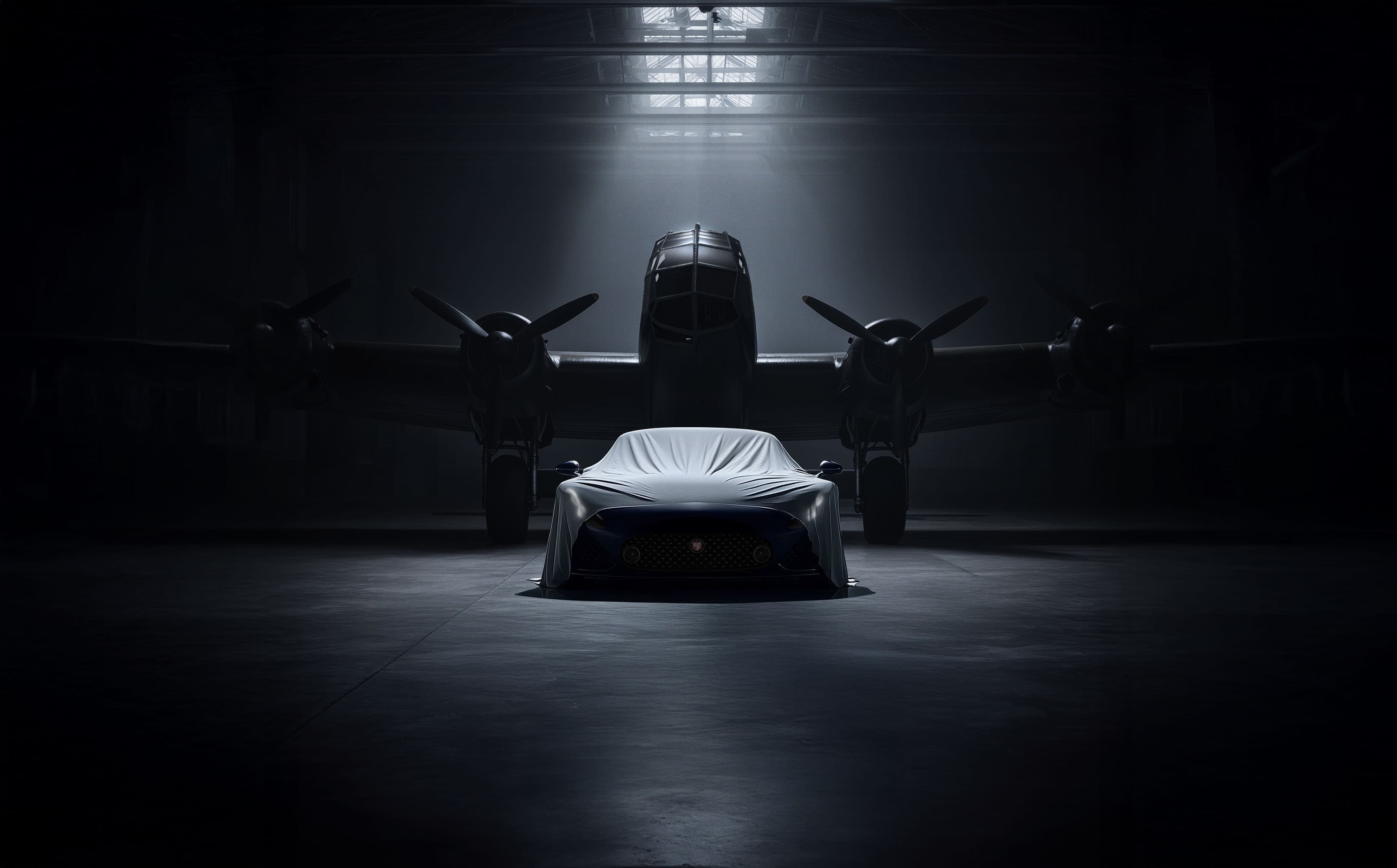
1961 · The V8 era
The V8 era begins.
With the 407 Bristol doubled its engine capacity, adopting a Chrysler V8 and automatic transmission in a hand-built aluminium sports saloon that was among the fastest of its day.
In 1961 the 407 replaced Bristol's own six with a Chrysler V8 and an automatic gearbox, and set the character of the marque for the next fifty years. The 408, 409 and 410 that followed in 1963, 1965 and 1967 refined it step by step, never for fashion's sake.
In 1961 Bristol replaced its 2.2-litre six with a 5.1-litre Chrysler V8 and the Torqueflite automatic gearbox, and the character of the marque for the next fifty years was set: quiet, effortless, hand-built cars that covered great distances without drama. The 407 kept the 406's aluminium body but gained coil-spring front suspension and new steering.
Two threads led to Chrysler. Reginald Verdon-Smith's enthusiasm for the Torqueflite began when Bristol Aeroplane's man in Canada lent him a Chrysler on a skiing trip in the 1950s, and Tony Crook's spirited demonstration laps in a Simca Aronde at Brands Hatch led directly to Chrysler inviting Bristol to try the gearbox. The 5,130 cc V8 doubled the engine size of the 406.
Keeping the 406's shape avoided delay. The transverse leaf gave way to coil springs at the front and the rack to Marles cam-and-roller steering. The Torqueflite was worked by illuminated push-buttons to the right of the dashboard, where the overdrive lever had been, and there was no parking lock. The Autocar found its test car almost neutral in its handling and extremely refined, though the steering was heavy at low speeds.
From the 407, bodies came from Park Royal Vehicles, bus-body builders since 1919. Their panel beaters wheeled 16-gauge aluminium over the bucks for the long wings, made the side window frames in brass before chroming and trial-fitted every screen and window before the body went by lorry to Filton. The work was of very high quality. Air Commodore Rod Banks recorded that John Mayo's first-production 407 had covered more than 300,000 miles yet looked completely new.
One 407 chassis went to an Italian coachbuilder, introduced through Zagato, for a convertible. The steel-bodied prototype was heavy, and the actor Peter Sellers talked his way into becoming its first owner. Otherwise open Bristol motoring waited for the 412.
The 408, shown at Earls Court in 1963, won the SMMT Coachwork Award in its class. It had a flatter roof, more chrome, a larger rectangular air intake and four headlamps, the first Bristol so fitted, with a bonnet now running the full length of the front. Filton's engineers achieved the new front by reshaping the body buck at Park Royal without altering the flowing wings. Armstrong Selectaride rear dampers could be adjusted electrically. The Mk2 408 of late 1964 took Chrysler's improved alloy-cased Torqueflite, with a lever and a parking lock, and the slightly larger 318 cu in V8.
The 409 added an alternator, a lighter battery, a higher axle ratio and a heated rear window, and Girling servo-assisted discs replaced the Dunlops after fade testing. The front suspension was softened by ten per cent and its roll centre raised. ZF power-assisted steering, developed over three years with ZF of Schwäbisch Gmünd, became an option for the 1966 show, on the 409 Series 2. Motor's verdict in 1965 summed up the method: Bristol took good advantage of new developments without pioneering them, since pioneering at such small volume would be a costly error. One press review compared the car's quietness at speed to a glider's.
These were the years of the Kensington High Street showroom, opened in the mid 1960s less as a sales outlet than as a reminder to Londoners that the car existed. Bristol offered five blues, three greens, three greys, black, crimson, light maroon and silver, with eight leather colours and special requests besides, which is why two identical Bristols are rare.
The 410, shown at Earls Court in 1967, had full-length twin chrome side trims, a floor-mounted selector in place of the push-buttons, which the American authorities had ruled against, and two fully separate brake circuits. Smaller 15 in wheels with Turbospeed cross-ply tyres lowered the centre of gravity. Special requests were met where they were safe: a customer's wish to move the fuel tank to make room for a sleeping platform was refused. In September 1969 Sir George White was gravely injured when a van slewed into his blue 410, an accident that changed the course of Bristol Cars; that story continues with the 411.
Figures as recorded in period and historical sources, reproduced as quoted rather than as tested figures. Blank cells are not restated in those sources.
| 407 | 408 | 409 | 410 | |
|---|---|---|---|---|
| Introduced | 1961 | Earls Court 1963; Mk2 late 1964 | 1965; Series 2 1966 | Earls Court 1967 |
| Engine | 5,130 cc (313 cu in) Chrysler V8 | as 407; Mk2 5,211 cc (318 cu in) | ||
| Transmission | Torqueflite, push-button, no parking lock | Mk2: alloy-cased Torqueflite with parking lock | axle ratio 3.07 | floor-mounted selector |
| Wheels | 16 in | 15 in | ||
| Brakes | Dunlop discs | Dunlop discs | Girling servo-assisted discs | two separate circuits |
| Steering | Marles cam and roller | as 407 | ZF power assistance optional from Series 2 |
Lineage and related pages
Sources. Bristol Cars Group heritage research from period and historical published sources; approved page copy, Bristol Cars Group. Figures quoted are Bristol Cars Ltd’s own published claims of the time and have not been independently tested by Bristol Cars Group Ltd.
Price new
What the 407, 408, 409 and 410 cost new, set against the cars at the same London shows wherever a list survives. Until 1973 British car prices were a basic price plus purchase tax, and the rate changed often. Prices here include purchase tax unless marked basic.
Bristol 407 · October 1961
£5,141[1][2]
Including £1,616 purchase tax.
| Car | Price |
|---|---|
| Bristol 407 | £5,141 |
| Jaguar Mk X | £2,392 |
| Daimler Majestic Major | £3,082 |
Same London Motor Show report
Bristol 408 · October 1963
£4,459 6s 3d[3][4][5]
Including purchase tax, after the cut of November 1962 from 45% to 25%.
| Car | Price |
|---|---|
| Bristol 408 | £4,459 6s 3d |
| Aston Martin DB5 | £4,175 |
| Mercedes-Benz 230SL | £3,595 |
| Jaguar S-Type 3.8 | £1,759 |
Same London Motor Show, from a 2023 account of it
Bristol 409 · October 1965
£4,849 7s 11d[6]
Including purchase tax. Motor Sport's London Motor Show report.
| Car | Price |
|---|---|
| Bristol 409 | £4,849 7s 11d |
| Aston Martin DB6 | £4,998 0s 5d |
| Bentley T-Series | £6,496 |
| Rolls-Royce Silver Shadow | £6,556 |
Same report
That year the 409 was £149 cheaper than a DB6.
Bristol 410 · 1967
£5,673 1s 10d[4]
Including purchase tax. No period list including the 410 has yet been found.
Sources
Bristol Cars Approved


